Yes, some electrolyte drinks are built for daily use, but most aren't. The difference comes down to sodium load, sugar content, and dosing. A drink formulated for a two-hour endurance event isn't automatically appropriate for a Tuesday at your desk, and knowing the daily guidelines helps explain why.
Daily electrolyte guidelines
Three electrolytes matter most when it comes to daily hydration: sodium, potassium, and magnesium.
- Sodium: Health authorities generally recommend staying under 2,300 mg per day, with some guidance (from the American Heart Association) pointing to an ideal target closer to 1,500 mg for most adults.
- Potassium: The adequate intake for adult men is around 3,400 mg per day, and around 2,600 mg for adult women, according to the National Academy of Medicine.
- Magnesium: Most adults need roughly 300 to 400 mg per day, depending on age and gender.
Most people don't hit these numbers through food alone. Surveys consistently show sodium intake running well above the guideline while potassium and magnesium intake often falls short, which is part of why electrolyte supplementation has become a daily habit for many people, not just an occasional recovery tool.
Why most electrolyte drinks aren't built for daily use
Many electrolyte products on the market are formulated for intense or prolonged exercise. Their sodium content is designed to replace what's lost across hours of heavy sweating, which puts a single serving well above what's appropriate as a daily baseline.
Add in the sugar content of many mainstream sports drinks, and daily use becomes harder to justify. A formula built for a marathon isn't the same as a formula built for a normal day.
What makes an electrolyte drink sensible to drink daily
A daily-appropriate electrolyte drink generally has a few things in common:
- Zero added sugar
- Sodium, potassium, and magnesium levels aligned with daily guidelines, not exercise-recovery spikes
- Dosing that avoids the digestive discomfort that can come with excessive single servings
This is the formulation gap Hydra+ was built to fill.
Why 2g of creatine fits a daily formulation
Your body breaks down roughly 2g of creatine per day through normal metabolic processes, mainly as creatine converts to creatinine and gets excreted. Around half of that is replaced through diet (mainly red meat and fish), and the other half is synthesized internally by the liver and kidneys.
A daily 2g dose is designed to match that turnover rate rather than exceed it. This differs from a "loading phase" approach, which uses much higher doses over a short window to rapidly saturate muscle stores. At 2g per day, the goal is consistent replacement, which supports baseline muscle and brain energy function over time, particularly for people with lower dietary creatine intake, such as those who eat less red meat or fish.
The brain relies on creatine for energy production alongside muscle tissue, and research points to this being especially relevant during periods of physical or mental stress, including sleep deprivation. It's worth noting that most of the research on cognitive performance specifically uses higher doses than 2g, since creatine has to cross the blood-brain barrier. A 2g daily dose is better understood as supporting baseline energy metabolism rather than a cognitive-enhancement dose on its own.
Creatine supplementation is well studied and considered safe at standard doses. A 2g daily amount sits comfortably below the range associated with digestive discomfort like bloating, which some people experience at higher single doses.
How Hydra+ fits in
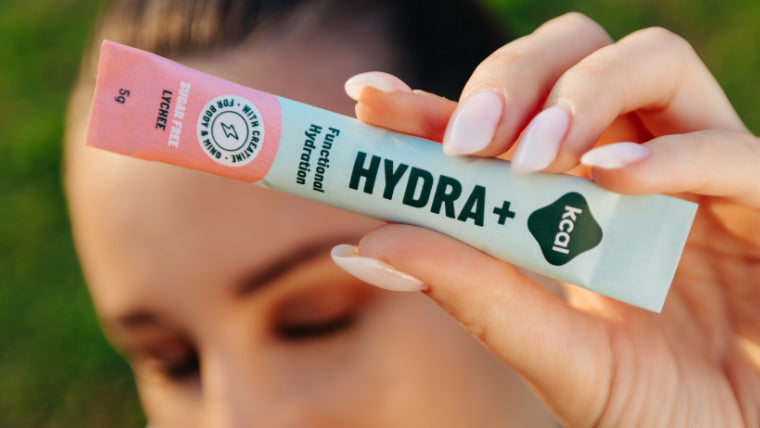
Hydra+ was formulated specifically for daily use rather than occasional, high-intensity recovery. Each sachet delivers a precision-formulated blend of sodium, potassium, and magnesium at levels aligned with daily needs, alongside 2g of creatine monohydrate, with zero added sugar.
Daily-appropriate hydration and consistent creatine replacement work together to support both physical output and baseline cognitive energy, not just the moments after a workout.