Your body relies on seven main electrolytes: sodium, potassium, chloride, calcium, magnesium, phosphate, and bicarbonate. Each one is a charged mineral dissolved in your blood and other fluids, and each plays a distinct role in keeping your nerves, muscles, and fluid balance working the way they should.
Below, we break down what each electrolyte does, why your body needs it, and which ones matter most when you sweat.
Sodium

Sodium regulates fluid balance throughout your body. It controls how much water sits inside and outside your cells, and it plays a direct role in nerve signaling and blood pressure.
Sodium is also the electrolyte you lose in the largest amount through sweat. Low sodium can show up as fatigue, headache, or muscle cramping, particularly after long periods of heat exposure or exercise.
Potassium

Potassium works inside your cells to support muscle contractions, including your heartbeat, and to help transmit nerve signals. It also works alongside sodium to manage fluid balance.
A potassium imbalance can affect muscle function and energy levels. Bananas, leafy greens, and potatoes are common dietary sources.
Chloride

Chloride partners with sodium to maintain fluid balance across your body. It's also a building block of stomach acid, which makes it part of how you digest food.
Chloride levels tend to track closely with sodium levels, since the two are so closely linked in the body's fluid regulation system.
Calcium

Most people associate calcium with bone health, and that's accurate, but it does far more. Calcium is required for muscle contraction, nerve transmission, and blood clotting.
Only a small percentage of your body's calcium circulates in your blood at any given time. The rest is stored in bone, which acts as a reserve the body draws from when needed.
Magnesium

Magnesium is involved in over 300 enzymatic reactions in the body. It supports muscle relaxation (the counterbalance to calcium's role in contraction), energy production, and nerve function.
Magnesium is lost through sweat alongside sodium and potassium, which is why it's a common focus in hydration and recovery formulas.
Phosphate

Phosphate works with calcium to support bone structure, and it's a key component of ATP, the molecule your cells use to store and release energy.
Phosphate deficiency is rare in healthy individuals with a typical diet, since it's present in a wide range of foods including dairy, meat, and grains.
Bicarbonate

Bicarbonate helps regulate your body's acid-base balance, keeping your blood pH within a narrow, stable range. It's produced and adjusted by your kidneys and lungs in response to what your body needs at any given moment.
Unlike the other six electrolytes, bicarbonate isn't something you typically consume or lose through sweat. It's managed internally as part of your body's regulatory systems.
Which electrolytes you actually lose through sweat
Of the seven, three matter most in the context of exercise, heat, and hydration: sodium, potassium, and magnesium. These are the electrolytes your body sheds fastest through sweat, and replacing them is what separates effective hydration from simply drinking water.
Water alone dilutes what's left. It doesn't replace what you've lost.
How Hydra+ fits in

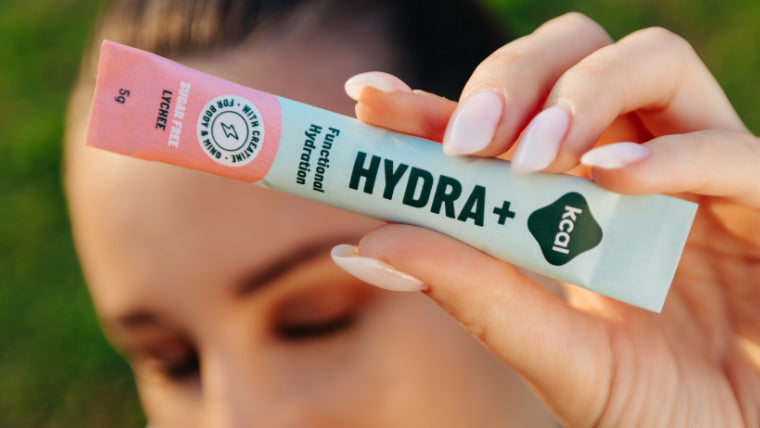
Hydra+ is formulated around this exact principle. Each sachet delivers a precision-formulated blend of electrolytes alongside 2g of creatine monohydrate, with zero added sugar. It's built for the moments when water isn't enough: after a workout, during a hot afternoon, or in the middle of a demanding workday.
Precise electrolyte replacement supports physical output, while creatine has a well-documented role in supporting cognitive function, not just muscle performance.
Shop Hydra+