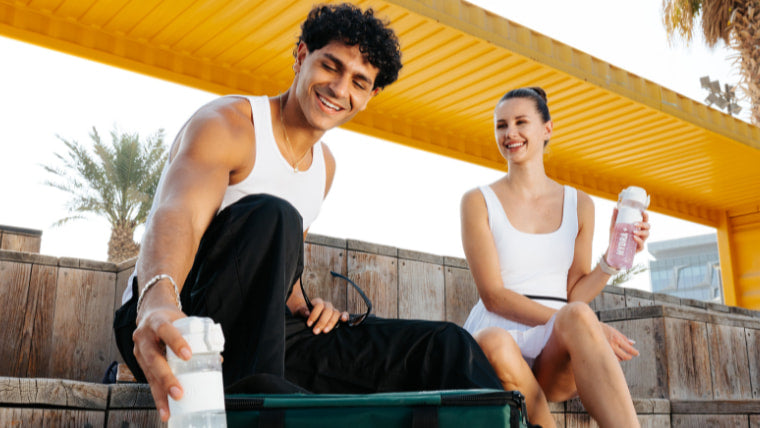
There's no single best time to drink electrolytes. It depends on what your day looks like: whether you're waking up after a hot night, training before the sun gets high, spending your afternoon outdoors, or simply going about a normal day in a climate that pulls more fluid from your body than most people realize.
In the UAE, where summer temperatures regularly pass 40°C and humidity makes it harder for sweat to evaporate and cool you down, timing matters more than it does in milder climates. Here's how to think about it.
Morning

Overnight, your body loses fluid through breathing and sweat, even with air conditioning running. In a hot, humid climate, that overnight loss tends to run higher than people expect, since bedrooms often stay warmer than ideal even with AC. Many people wake up already behind on hydration before they've had coffee, which itself has a mild diuretic effect.
Drinking electrolytes in the morning, before caffeine, is a simple way to set a fluid and mineral baseline before the rest of the day (and the heat) adds further demand.
Before outdoor activity

If you're heading outside during the hotter parts of the day, sodium in particular helps your body hold onto fluid before you start losing it. Pre-loading electrolytes 30 to 60 minutes before outdoor activity gives your body a head start, which matters most in a climate where the hottest window (typically midday through mid-afternoon) can push conditions from uncomfortable to genuinely risky.
Timing outdoor training for early morning or evening, when temperatures are more manageable, remains one of the most effective strategies in UAE summers. Electrolyte timing works alongside that, not instead of it.
During activity

For longer sessions, especially outdoors in summer heat, sweat rate increases quickly and takes sodium and potassium with it. This is the scenario most mainstream sports drinks are built around, and it's real: in high heat and humidity, sweat losses can be significant even over a relatively short session.
If you're training or working outdoors for an extended period in UAE conditions, sipping electrolytes throughout, not just before or after, helps offset what you're losing in real time.
After activity

Post-activity is when most people think to reach for electrolytes, and for good reason. Replacing what you've lost supports recovery, and this is also where creatine plays a role, supporting the energy replenishment your muscles need after exertion.
In a hot climate, recovery windows matter more, since heat itself adds physical strain on top of whatever activity you did.
During peak heat, even without exercise
One of the most overlooked timing scenarios in the GCC is heat exposure without exercise. Simply being outdoors, commuting, or moving between air-conditioned spaces and outdoor heat during the hottest part of the day (roughly 12pm to 4pm) causes fluid and electrolyte loss on its own. You don't need to be sweating heavily at the gym to be losing sodium and potassium; standing at a bus stop or walking to your car in July can do it too.
Spread through the day
For a lot of people, the most realistic answer isn't a specific window at all. It's building electrolytes into a daily routine, the same way you'd build in a consistent water intake habit, rather than timing it around a single trigger.
This is particularly relevant in a climate where baseline fluid and electrolyte loss happens throughout the day, not just during a workout.
When is the best time to drink Hydra+ electrolytes?
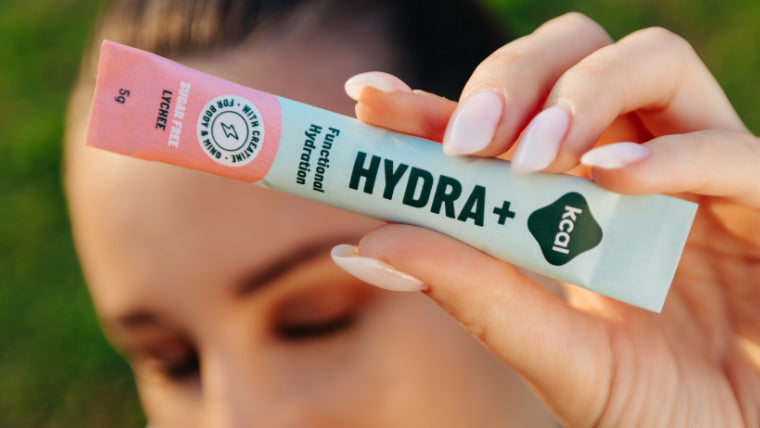
Hydra+ is formulated to work across all of these moments rather than being built for just one. Zero added sugar and daily-appropriate dosing mean it fits a morning routine, a pre-activity habit, a recovery moment, or simply a consistent part of your day, without the sodium spike or sugar load of a product designed only for prolonged athletic recovery.
In a climate that asks more of your hydration than most, having a formula flexible enough to fit your actual day matters more than chasing a single "optimal" time.