Most people treat creatine and electrolytes as two separate jobs: one for strength, one for hydration. Mix them together, and something more specific happens: sodium becomes the delivery mechanism that helps move creatine into your muscle cells in the first place.
The short answer
Creatine doesn't enter muscle cells on its own. It needs a transporter called CreaT1, and that transporter depends on sodium to function. When you take creatine alongside a sodium-containing electrolyte formula, you're supplying the exact ion that transporter needs to do its job, rather than asking it to work with whatever sodium happens to already be in your system.
That's the mechanism. The result is two outcomes layered on top of each other: better-supported creatine uptake, and the fluid balance benefits electrolytes provide on their own.
How creatine actually gets into your muscles
Creatine is made in your liver, kidneys, and pancreas, and roughly 95% of it ends up stored in skeletal muscle, but it doesn't diffuse there passively. It crosses into muscle cells through a sodium-dependent transporter. No sodium gradient, no transport.
This is why creatine research has consistently paired the compound with carbohydrate or sodium-rich intake: both elevate the conditions that help the transporter work efficiently. An electrolyte formula with a meaningful sodium content does the same job more directly, without the added sugar.
What "hyperhydration" means, and why it matters
Once creatine is inside the muscle cell, it pulls water in with it, a phenomenon researchers call intracellular hyperhydration. Your muscles end up holding slightly more water inside the cell, not just around it.
This matters because most hydration advice focuses on getting water into your body in general. Hyperhydration is more specific: it's about getting water into the cells doing the work. Electrolytes regulate that same inside-the-cell, outside-the-cell balance: sodium primarily manages fluid outside your cells, potassium manages it inside. Pairing creatine with a full electrolyte profile means both sides of that equation are being supported at once, instead of leaving one side to chance.
Why pairing them is more than convenience
It's easy to assume the only benefit of combining creatine and electrolytes is fewer scoops in your day. That's real, but it's not the main point.
The two ingredients are solving adjacent problems with the same underlying currency: sodium and fluid balance.
- Electrolytes alone replace what you lose through sweat and support nerve and muscle function.
- Creatine alone supports muscle energy output (ATP regeneration) and, over time, strength and power.
- Together, the sodium your body needs for hydration is the same sodium creatine needs for transport, so a formula built around both is working with your physiology instead of asking you to manage two separate inputs.
This is also why a generic sports drink isn't a substitute. Most are built around sugar and a thin electrolyte profile, not the sodium-to-creatine ratio that actually supports uptake.
Who benefits most from this combination
A few groups will notice this pairing matters more than others:
- People training in heat. High sweat rates deplete sodium fast, which means less of it is available to support creatine transport on top of basic hydration. This is especially relevant for anyone training or simply living through extended heat exposure. Sweat losses in the UAE's summer months are significantly higher than in temperate climates, even for people who aren't exercising outdoors.
- Gym-goers and athletes. Anyone already taking creatine for strength or power benefits from a formula that supports its uptake rather than leaving it to whatever sodium is left in the diet that day.
- Busy professionals. People who spend most of the day in air-conditioned offices and cars often under-hydrate without realizing it. Dry indoor air increases water loss even without visible sweating. A combined formula covers both the hydration gap and the creatine support in one step.
- Anyone on a lower-sodium or low-carb diet. These diets reduce the sodium typically available to support creatine transport, making a deliberate electrolyte source more relevant, not less.
How to actually do it
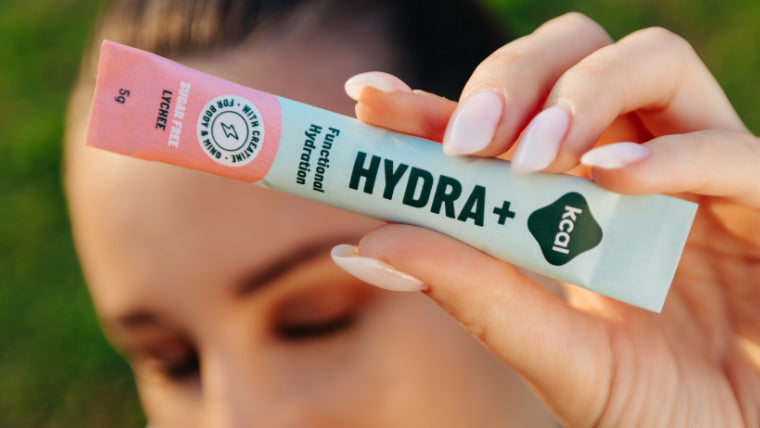
If you're adding creatine to your routine, look for a formula where the sodium content is meaningful, not a trace amount included for taste. Hydra+ is built around 2g of creatine monohydrate per sachet alongside a full electrolyte profile, so the sodium needed to support transport is already part of the formula rather than something you have to source separately.
Timing matters less than consistency. Creatine works through saturation over time, not a single dose, so taking it daily, at whatever time fits your routine, matters more than taking it at a specific hour.
Common questions
Does sodium actually help creatine absorption, or is that overstated? The sodium-dependent transporter is well established in the physiology literature. It's not a marketing claim. What varies is how much difference it makes day to day, which depends on your existing sodium intake and activity level.
Can I just take creatine with regular water and get the same effect? You'll still absorb creatine with plain water, since your body has its own baseline sodium levels. The benefit of pairing it with electrolytes is making sure that sodium gradient is consistently well-supported, rather than dependent on whatever you ate that day.
Is it safe to take creatine and electrolytes together daily? For most healthy adults, yes. People with kidney conditions, low-sodium diets prescribed for medical reasons, or anyone on blood pressure medication should check with a doctor before adding either supplement, since both affect fluid balance.
Will this combination cause bloating or water retention? Hyperhydration happens inside the muscle cell, which is different from the puffy, under-the-skin water retention people usually mean by "bloating." Most people report feeling more hydrated, not heavier.
Creatine and electrolytes were never really separate categories. They were always going to end up sharing a formula. Hydra+ was built around that overlap from the start, not as two products bundled together. See the full formula →