Electrolytes do far more than replace what you lose in sweat. Here is what each mineral actually does, why most adults are short on at least one, and what happens to your body and performance when you replenish them properly.
Electrolytes are minerals with an electrical charge that your body uses to keep almost every system running correctly. They regulate fluid balance, fire nerve signals, contract muscle, and maintain the pH of your blood. Without them, water alone cannot do the job.
Most people understand this in a vague way. Few appreciate how quickly electrolyte levels shift in response to heat, exercise, air conditioning, caffeine, or a low-carbohydrate diet, or how tangible the effects of running low actually are. We cover what each electrolyte does, what the research says about the consequences of depletion, and why replenishing them deliberately is one of the most straightforward performance and wellness interventions available.
What each electrolyte does

Sodium
Sodium is the primary electrolyte in the fluid surrounding your cells. It regulates how much water your body retains, supports nerve signal transmission, and maintains blood pressure. It is also the main electrolyte lost in sweat, which is why sweat tastes salty.
Sodium plays a gate-keeping role in absorption: it is required for your body to take up glucose, amino acids, and other compounds through intestinal transport proteins. This is the same mechanism that governs creatine uptake in muscle tissue (see below). Without adequate sodium, the efficiency of every other nutrient your body is trying to absorb is compromised.
Potassium
Potassium operates primarily inside your cells, where it works in opposition to sodium to maintain electrical gradients across cell membranes. These gradients are what allow nerves to fire and muscles to contract. It also plays a direct role in regulating blood pressure: higher dietary potassium intake has been consistently associated with lower cardiovascular risk in the research literature.
Source: WHO Potassium Intake Guidelines; Dose-response meta-analysis of potassium intake and blood pressure, medRxiv, 2024.
Magnesium
Magnesium is involved in over 300 enzymatic processes in the body, including ATP production, protein synthesis, muscle relaxation, nerve transmission, and sleep regulation. Despite its broad importance, large population surveys consistently show that a substantial proportion of adults fail to meet recommended intake levels.
The performance consequences of magnesium insufficiency are well established. Research published in PMC confirms that deficiency contributes to muscle weakness, cramps, and impaired physical performance, with higher magnesium status independently associated with greater muscle strength and power in observational studies.
Calcium
Calcium is most commonly associated with bone density, but it plays an equally important role in muscle contraction and nerve signalling. Every time a muscle fibre contracts, calcium is released from the muscle's own stores to trigger the contraction mechanism. Adequate circulating calcium ensures this process is reliable and efficient.
Chloride
Chloride is the anionic partner to sodium, and the two are lost together in sweat as sodium chloride. It maintains fluid and acid-base balance, supports proper stomach acid production, and contributes to the osmotic pressure that keeps fluid distributed correctly between body compartments.
Phosphate
Phosphate is central to energy metabolism. It is the mineral component of ATP (adenosine triphosphate), the molecule your cells use as the primary unit of energy. During high-intensity exercise, phosphate availability directly influences how quickly and efficiently ATP can be regenerated between efforts.
Why electrolyte replenishment matters
Performance and hydration

The relationship between electrolyte balance and physical performance is one of the most consistently supported findings in sports nutrition research. The American College of Sports Medicine position stand states that a fluid loss of just 2% of body weight is sufficient to compromise endurance performance, and that the goal of any hydration strategy should be to prevent excessive changes in electrolyte balance, not just fluid volume.
This matters because plain water does not replace what sweat removes. When you sweat, you lose sodium, potassium, chloride, and smaller amounts of magnesium and calcium. Drinking water alone in high volumes can actually dilute the sodium remaining in your blood, a condition called hyponatraemia that impairs performance and, in severe cases, becomes a medical emergency.
Muscle function and cramp prevention

Muscle cramps during exercise are often attributed to dehydration, but the more accurate picture is electrolyte imbalance: specifically low sodium, potassium, or magnesium. Each of these minerals plays a role in the electrical signalling that triggers and releases muscle contractions. When any one of them is depleted, the timing and reliability of those signals is disrupted.
Replenishing electrolytes before and during sustained activity, particularly in heat, reduces the conditions that lead to cramping and supports more consistent muscle output across the full duration of training or competition.
Cognitive function and nerve signalling

Sodium and potassium are essential for generating the action potentials that carry signals from the brain to the body. Deficiencies in either mineral are linked to reduced cognitive sharpness, slower reaction time, and generalised fatigue that does not respond to rest or caffeine.
This effect is not limited to athletes. Office workers, professionals managing long workdays, and anyone spending extended time in air-conditioned environments (which accelerates fluid and electrolyte loss without the visible cue of sweat) are equally susceptible to the cognitive effects of mild electrolyte depletion.
Recovery

Electrolytes support recovery through two complementary mechanisms. First, replacing minerals lost during exercise restores the conditions required for muscle repair and protein synthesis. Second, adequate magnesium specifically has been shown to support sleep quality, which is where the majority of physiological recovery actually occurs.
Training adaptation, in other words, does not happen in the gym. It happens during sleep, and sleep quality is partly a function of magnesium status.
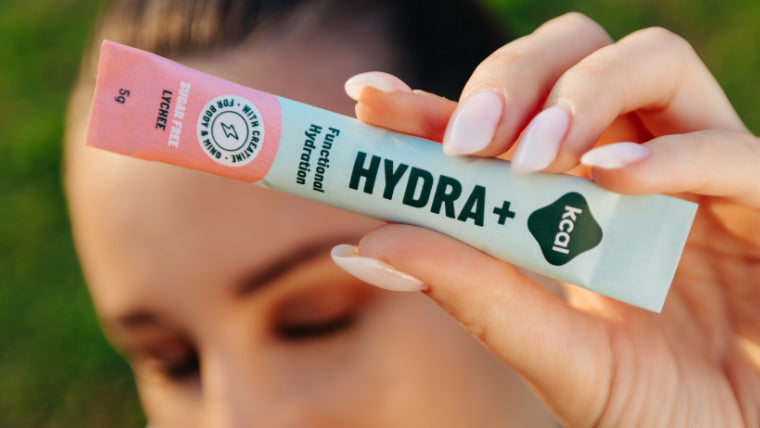
Hydra+ electrolytes with 2g of creatine monohydrate

Hydra+ is formulated as a complete hydration solution, not a basic electrolyte replacement. Alongside its full mineral profile, each sachet contains 2 grams of creatine monohydrate, which is where the formula goes beyond what standard electrolyte drinks offer.
Why creatine belongs in a hydration formula
Creatine is one of the most extensively researched supplements in sports nutrition. The International Society of Sports Nutrition has confirmed in its position stand that creatine monohydrate is the most effective ergogenic supplement currently available in terms of increasing high-intensity exercise capacity and lean body mass during training. Its long-term safety profile has been established at doses of up to 30g per day over five years.
The case for including creatine in a hydration formula is not just about convenience. It is mechanistic: creatine is transported into muscle cells via a sodium-dependent transporter called CreaT1. The same sodium that your body needs for hydration is the ion that drives creatine into your muscle cells. A formula that delivers both together is not a bundle of two separate products. It is a formula where the ingredients work through the same transport pathway.
What the research shows
Muscle strength and performance. A 2025 systematic review confirmed that creatine monohydrate supplementation effectively enhances athletic performance, accelerates recovery, and increases muscle strength and mass in both athletes and non-athletes. Evidence from randomised clinical trials and long-term studies consistently supports these outcomes.
Cognitive function. A 2024 meta-analysis found that creatine supplementation produced meaningful improvements in memory, attention, and processing speed. A separate review confirmed that short-term memory and reasoning may be improved by creatine use, with effects potentially more pronounced in individuals who consume lower amounts through diet, including those who eat little or no red meat.
Sources: Green DJ. Creatine Reconsidered: What the Latest Research Reveals. ACE Fitness Certified, May 2025. | Kreider RB, et al. International Society of Sports Nutrition Position Stand: Safety and Efficacy of Creatine Supplementation. Journal of the ISSN, 2017.
Healthy ageing. A 2025 narrative review in the Journal of the International Society of Sports Nutrition found that creatine monohydrate, primarily when combined with exercise, supports lean body mass, muscle strength, bone density, functional ability, and cognition in older adults, with potential applications for age-related muscle loss and metabolic disorders.
How much do you need?
The evidence-backed maintenance dose for creatine is 3 to 5 grams per day. Two sachets of Hydra+ per day delivers 4 grams of creatine alongside a full electrolyte profile, meeting the daily target without additional supplementation. One sachet is a meaningful contribution to the daily dose and an effective hydration solution on its own.
There is no need for a loading phase. A consistent daily intake reaches the same muscle saturation level as an aggressive loading protocol, without the potential for early digestive discomfort.
Hydrating the way your body needs
Electrolytes and creatine are not two separate categories that happen to share a sachet. They operate through the same transport system, support overlapping outcomes, and together address the gap between drinking water and actually hydrating the way your body needs. Shop Hydra+ Eletrolytes